 Join Our Team

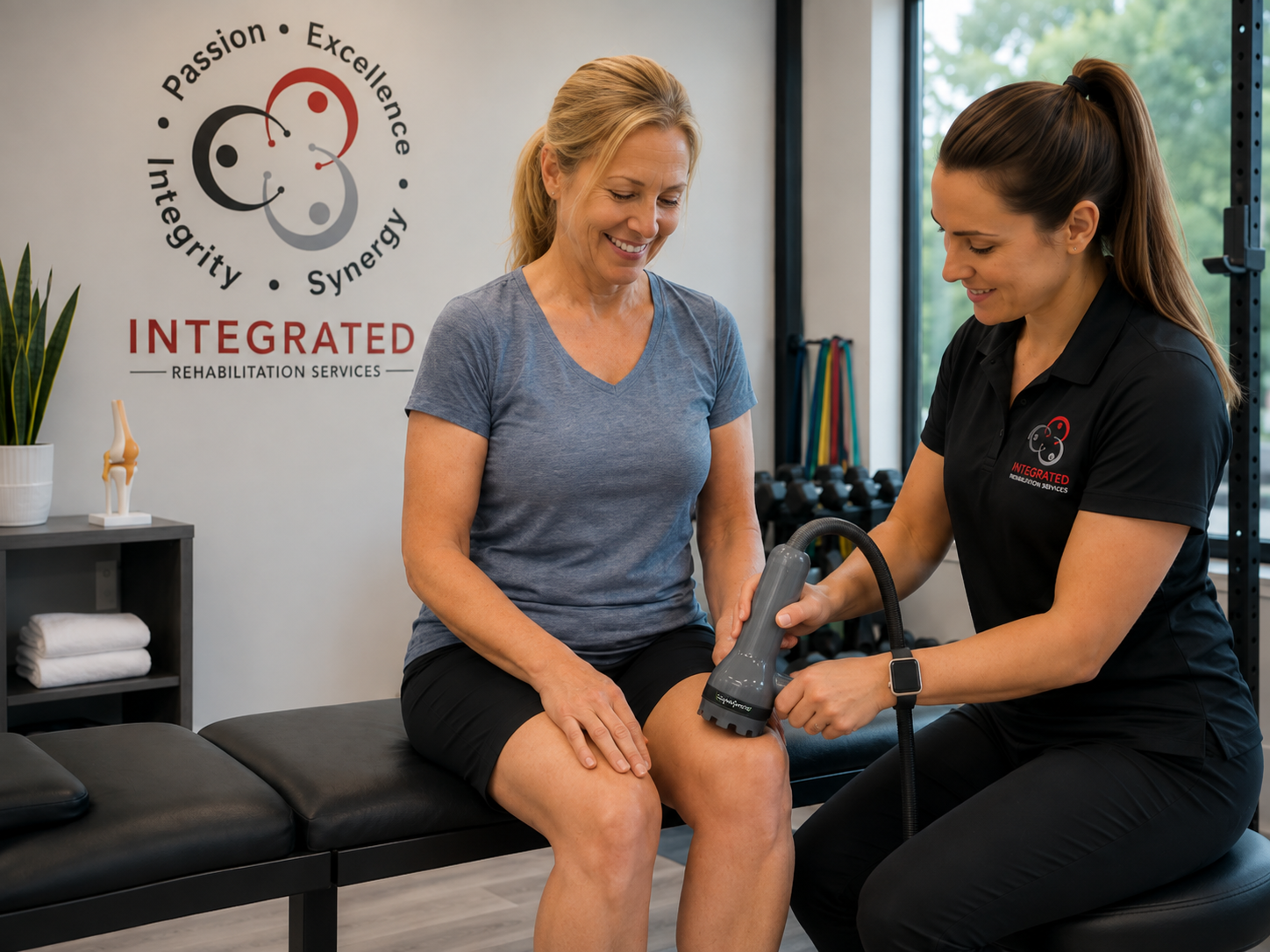
Acute or chronic pain can disrupt your life by limiting range of motion, affecting movement and increasing fatigue. Every day, it may become more challenging to perform your job, maintain relationships and take care of your home.
Low-level laser therapy (LLLT) is an innovative, increasingly popular treatment that uses focused light to manage pain without medication, injections or surgery. At Integrated Rehabilitation Services, we combine this therapy with certain physical therapy plans to give the body support as it relearns familiar movements.
Learn how this non-invasive therapy might fit into your physical recovery.
What Is Low-Level Laser Therapy?
Low-level laser therapy takes advantage of how the body’s cells use natural light to regulate various processes. This includes repairing tissues and protecting against oxidative stress.
A calibrated beam encourages the body’s natural healing response by:
- Causing the mitochondria, the energy center of each cell, to produce adenosine triphosphate (ATP), a substance that kickstarts tissue repair and regeneration.
- Enhancing blood flow and circulation, diverting more nutrients to affected tissue.
- Decreasing oxidative stress and inflammation, both of which stall how the body heals.
- Increasing cellular activity to help various musculoskeletal injuries efficiently heal.
- Reducing byproducts of inflammation, like swelling, irritation and edema.
- Complementing exercise and other active therapies to increase your mobility, strength and range of motion without pain medication.
How Does Low-Level Laser Therapy Support Pain Management?
Studies show that LLLT alters the nervous system’s pain receptors while stimulating cellular energy production. For physical therapy, it proves to be an effective pain management solution that requires no downtime and supports a wide range of rehabilitative plans.
Which Musculoskeletal Conditions Benefit from Low-Level Laser Therapy?
Muscles, joints, ligaments and bones absorb the light produced by the LLLT device. As the cells respond, patients may notice less pain and experience more limber muscles and joints. With fewer hurdles stalling recovery, more effort can go toward regaining strength, returning to work and getting back to activities.
Various soft tissue and musculoskeletal injuries respond to LLLT, including:
- Tendonitis, bursitis, plantar fasciitis and tennis elbow
- Muscle and joint pain
- Back and neck pain
- Sprains, strains and fractures
- Osteoarthritis, rheumatoid arthritis and degenerative joint disease
- Carpal tunnel syndrome
- Sports, athletic and workplace injuries
- Post-surgical recovery
- Temporomandibular joint disorders (TMD)
- Shoulder impingement
- Disc degeneration, herniation and sciatica
- Neuropathic pain
- Lymphedema
- Fibromyalgia
- Chronic pain
How Does Low-Level Laser Therapy Address Different Types of Pain?
LLLT’s ability to generate energy, stimulate healing and mute overactive nerves can help address the many causes and effects of pain, including:
- Chronic Pain: Increasing blood flow and moving the healing process past the inflammatory stage can make living with arthritis, neuropathy, fibromyalgia or another chronic condition more manageable.
- Chronic Inflammation: Reducing swelling can help increase range of motion and reduce discomfort, getting individuals back on their feet sooner.
- Soft Tissue Injuries: Rising energy levels and decreased pain can support muscle, tendon and ligament repair.
- Surgical Recovery: Following joint replacement and other procedures, LLLT often smooths a patient’s recovery timeline by managing swelling and stimulating healing. Individuals find they can move sooner and with greater ease, and scarring is less of a concern.
How Does LLLT Support the Healing Process?
When healing slows or stops, wounds and damaged tissue are left in a state of flux. More commonly, the inflammatory stage repeats itself while delaying new tissue generation.
The core function of low-level laser therapy helps the body clear this hurdle by:
- Encouraging the cells to generate more ATP, essential for tissue and nerve repair.
- Delivering more nutrients to the injury site. Oxygen fuels new tissue generation by controlling infection and increasing both collagen and blood vessel production.
- Minimizing swelling and inflammatory factors, known to extend the healing process and contribute to chronic wounds.
What Makes Low-Level Laser Therapy a Convenient Treatment Option?
During sessions, patients report feeling mild warmth when the focused light is applied to their skin. Because treatment typically lasts no more than 30 minutes, LLLT:
- Is easily integrated into your physical therapy appointments.
- Takes minimal time out of your schedule, even when multiple sessions are recommended.
- Requires no injections, incisions or downtime.
Integrated Rehabilitation Services can develop a personalized treatment plan to guide injury recovery through pain management and increased mobility. To learn more about low-level laser therapy and the LightForce® XLi Laser, schedule an evaluation today.